Four days behind schedule
Grix crash-lands her freighter and keeps her crew alive. Her employer’s response is to remind her that she is behind schedule and about to make an unapproved stop. The company message tells you where this book’s attention is going: survival is an inconvenient complication in the delivery record.
Vess finds Lux money where it should not be, in the accounts connected to her spiritual mother. Grix discovers a problem in her cargo manifest. Their jobs and beliefs put them in different corners of the same arrangement, and their discoveries make them useful to each other when both institutions turn hostile.
Evidence needs somebody to care
The pair end up running from a corporation and a church at once. Taking evidence to the government sounds like a sensible next step. Going after Lux costs money. Going after the Renunciation costs votes. Each route to help runs into somebody else’s calculation.
What disturbed me most was the response beyond those offices. They can tell people what happened, and somebody still wants their antigrav shoes on time. It is a bleak joke about what knowledge is worth when acting on it might inconvenience you. The setting is full of alien worlds; that particular reaction needs very little explanation.
Color you can almost touch
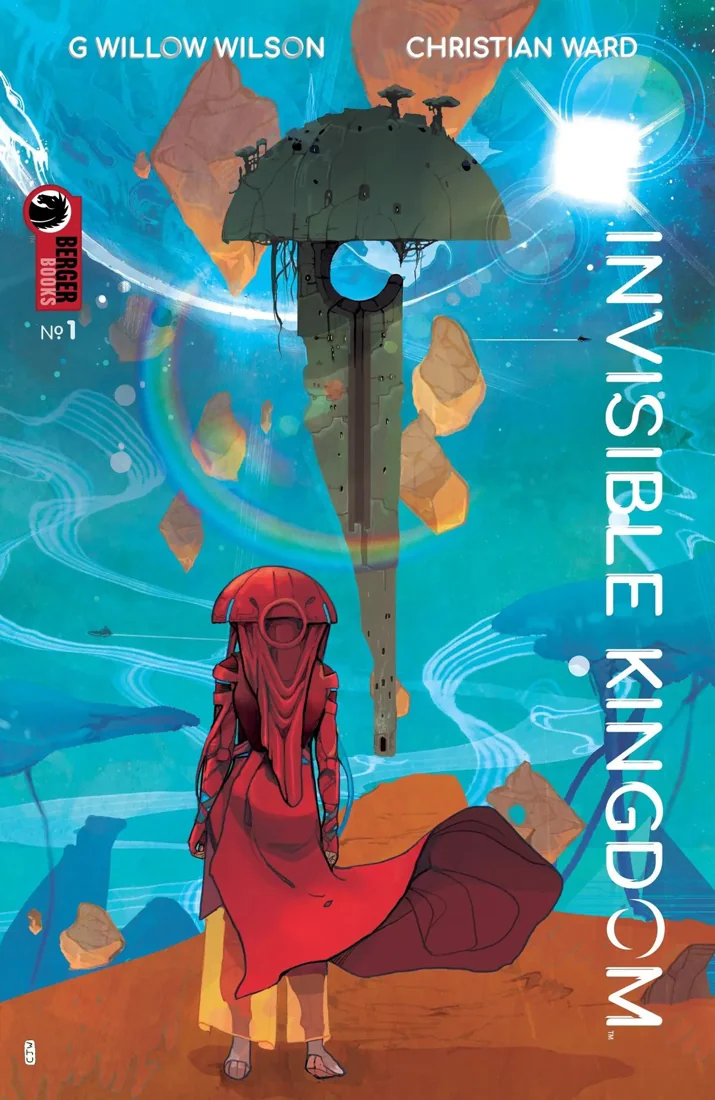
Christian Ward draws and colors the book. Electric blue pours from engines; pink and violet stretch across space. Even the debris has a wet, painted texture. The palette makes the places these characters work and worship worth looking at before the dialogue tells you what is wrong there.
Ward can settle a conversation into a grid, letting the faces and bodies hold your attention. Then a ship is in trouble and the structure breaks into slanted pieces. Alarms seem to occupy the page itself. The changes in layout make the loss of control something you read with your eyes before working through the words.
How blunt do you want it?
The corporate symbolism is easy to see. A logo on a face and a warship name make the target clear. If you want satire that keeps its parallels buried, this may feel too direct. I was happy for the book to swing this hard because the crew’s predicament keeps that anger attached to people.
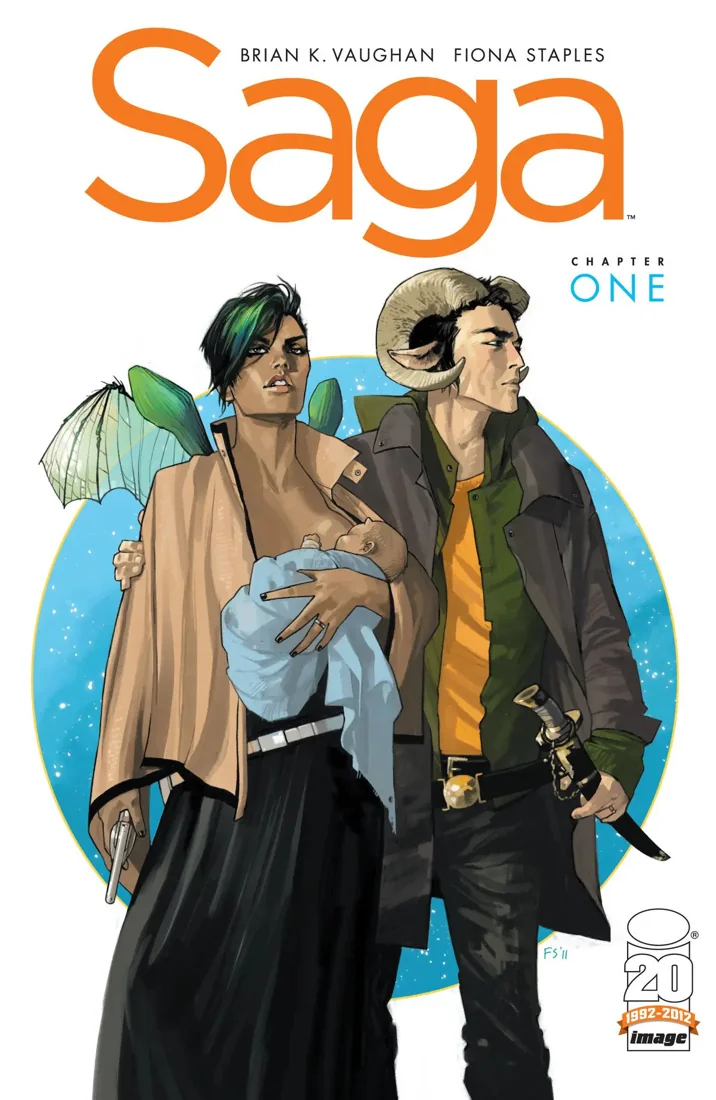
The first collection gives you the conspiracy and the difficulty of making anybody respond to it. It also leaves a larger journey ahead. Readers drawn to Saga’s uneasy space travel should find plenty to enjoy here, especially if the thought of pressing Buy Now already comes with a little guilt.