
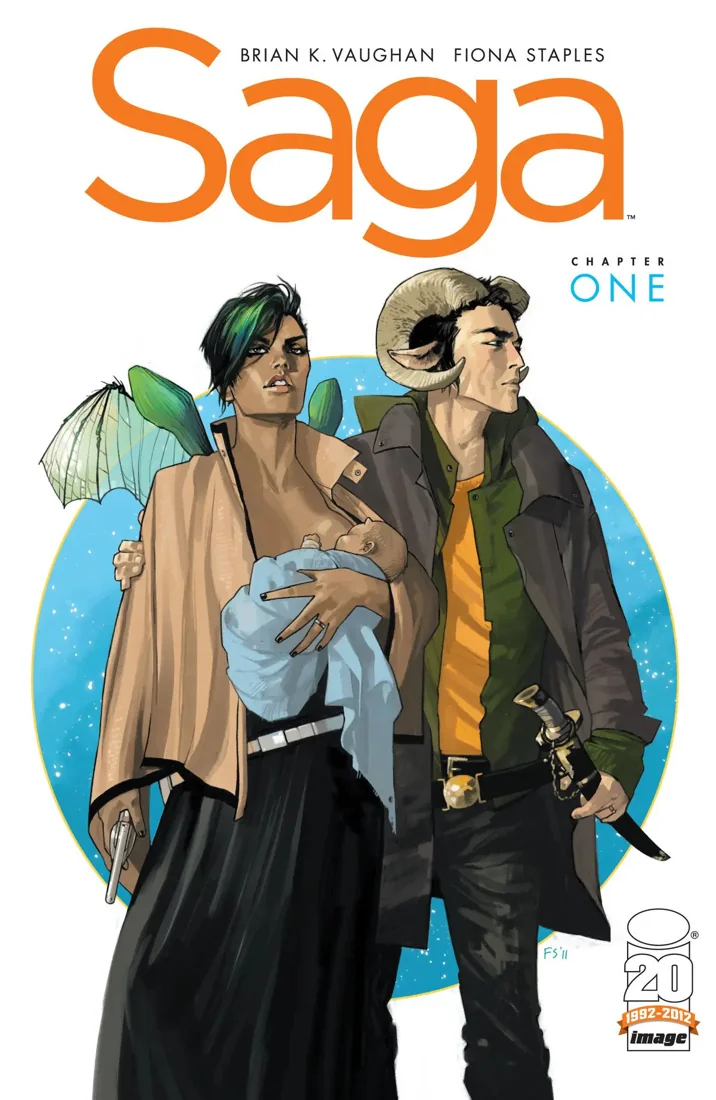
Saga, Volumes 1–2 cover

Science fiction · Spoiler-light review

Saga, Volumes 1–2 Review: Which Children Count?

Brian K. Vaughan and Fiona Staples send a new family into a war that cannot tolerate its existence. The first twelve issues are filthy, funny, and painfully good at showing how people learn whom to hate.

The book

Alana and Marko were soldiers on opposing sides of an interplanetary war. With newborn Hazel, they are trying to escape the people who want their family erased.

Brian K. Vaughan · Fiona Staples · Fonografiks

Book page, reading status & discussions →

The verdict

I’d put these first two volumes in the hands of an adult reader who thinks space opera cannot say much about a family. The jokes make the danger easier to walk into; the family makes it harder to leave.

Read it if

You like adult space opera, messy relationships, strange creatures, and a story willing to make you laugh seconds before it hurts.

Maybe skip if

You need something suitable for children or a finished saga in two volumes. Expect graphic sex, violence, profanity, and a story that continues well beyond these twelve issues.

Content note

Reviews trade paperbacks Volumes 1–2, collecting issues #1–12; these are not the larger hardcover Book One and Book Two. Discusses early character moments and the family’s situation, with later outcomes left alone. The cover shown is issue #1 artwork.

A birth in the middle of a war

The first thing Alana wants to know is whether she is pooping herself. A baby is arriving, soldiers are hunting the parents, and Vaughan still leaves room for the unglamorous work of giving birth. Marko has sworn off his sword and ends up using his teeth on an umbilical cord. Alana would have preferred an exception.

A huge war begins for us in the space around a newborn.Saga, Volumes 1–2 · Fiona Staples · Fonografiks. Artwork © its respective rights holders. Interior detail · Edition information.
The conversation leaves room for the small disagreements of new parents.Saga, Volumes 1–2 · Fiona Staples · Fonografiks. Artwork © its respective rights holders. Interior detail · Edition information.

They argue about a name while the danger keeps approaching. That rhythm becomes the book’s great pleasure: a recognizable disagreement opens into a ridiculous image, then somebody gets shot. Alana and Marko need to keep their marriage working while they learn how to keep a child alive. Neither task waits politely for the other.

The people coming after them

The people hunting this family have their own pressures and private rules. Prince Robot IV can keep an outwardly composed face while his screen betrays something of what war has done to him. The Will can accept a job that threatens one child and put himself in danger to protect another.

The screen makes an outwardly composed character unusually readable.Saga, Volumes 1–2 · Fiona Staples · Fonografiks. Artwork © its respective rights holders. Interior detail · Edition information.

I found myself cheering for a killer and wanting him nowhere near Hazel. That discomfort matters. These people have histories and loyalties that explain what they do without making their choices harmless. They have decided which children count. The book keeps asking us to notice who gets left outside that decision.

A childhood taught to hate

Volume Two goes back to Marko as a boy. At first there is a dog, warm light, and a world that looks open to him. Then his parents take him to an old battlefield, and the lesson changes. Staples lets the child’s face register what he is being asked to feel.

The warmth of the childhood scene makes the later lesson harder to take.Saga, Volumes 1–2 · Fiona Staples. Artwork © its respective rights holders. Interior detail · Edition information.
Staples gives an inherited hatred a child’s expression.Saga, Volumes 1–2 · Fiona Staples · Fonografiks. Artwork © its respective rights holders. Interior detail · Edition information.

We have already met the woman he will marry. Watching him learn to hate her people makes the scene more painful than another explanation of the war could have been. Later, the arrival of grandparents brings the conflict into the family’s own space. Generations have to share a room before anyone has finished sorting out what they believe.

Why the colors stay with me

Staples can move from the warm gold around Hazel’s birth to a cold blue forest with eyes waiting in it. The change in temperature makes safety feel temporary. The weird creatures and impossible technology sit comfortably beside small gestures between tired people. I believe the place because I believe the way they look at each other.

Hazel’s future narration gives us one quiet assurance: she has a voice from somewhere beyond this moment. It leaves everybody else’s safety uncertain. Across the first twelve issues, that voice gives the chaos a tender shape without promising that love will make the journey easy. I finished these volumes wanting more time with the family, even knowing what that would probably cost them.
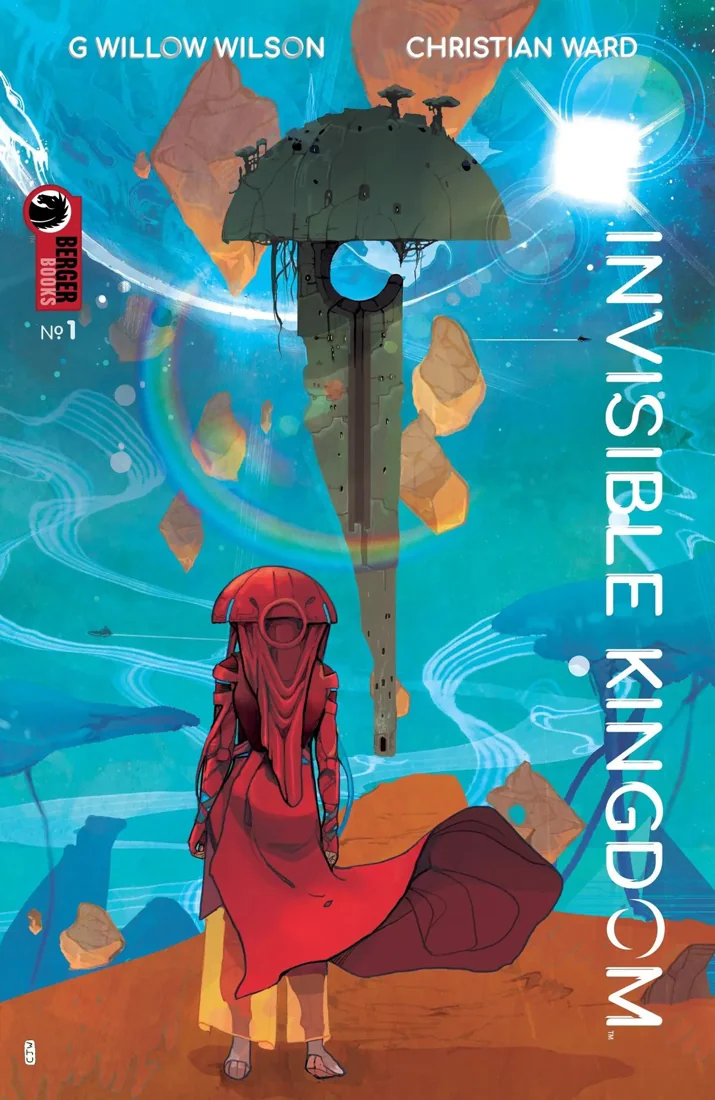
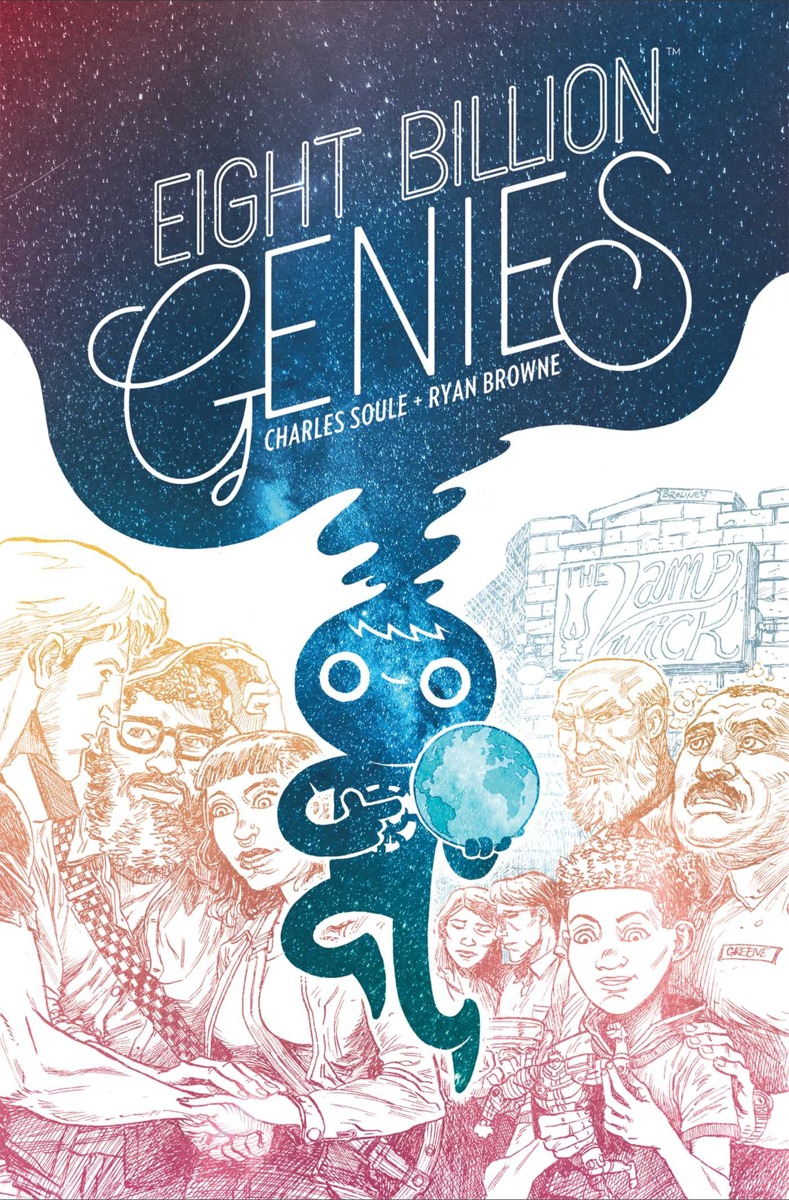
Find your next comic

Follow what you liked.

Ground Floor Comics matches you with comics by what you actually liked about a book. Each shelf follows a different part of its appeal.

Explore from Saga, Volumes 1–2

Shelves from Saga, Volumes 1–2

Mismatched companions learning practical care12 booksFunny Adventures with Real Darkness Underneath12 booksGore, jokes, and comfort food in the same breath7 books

Watch the video review

Saga, Volumes 1–2

Narrated by Josh Brown with on-screen captions.

2:55 · Narrated by Josh Brown

Artwork belongs to its respective creators and rights holders.

Follow Ground Floor Comics for more short reviews.

Open watch page and more videos →

Back to what to read next