A father who can’t stop looking
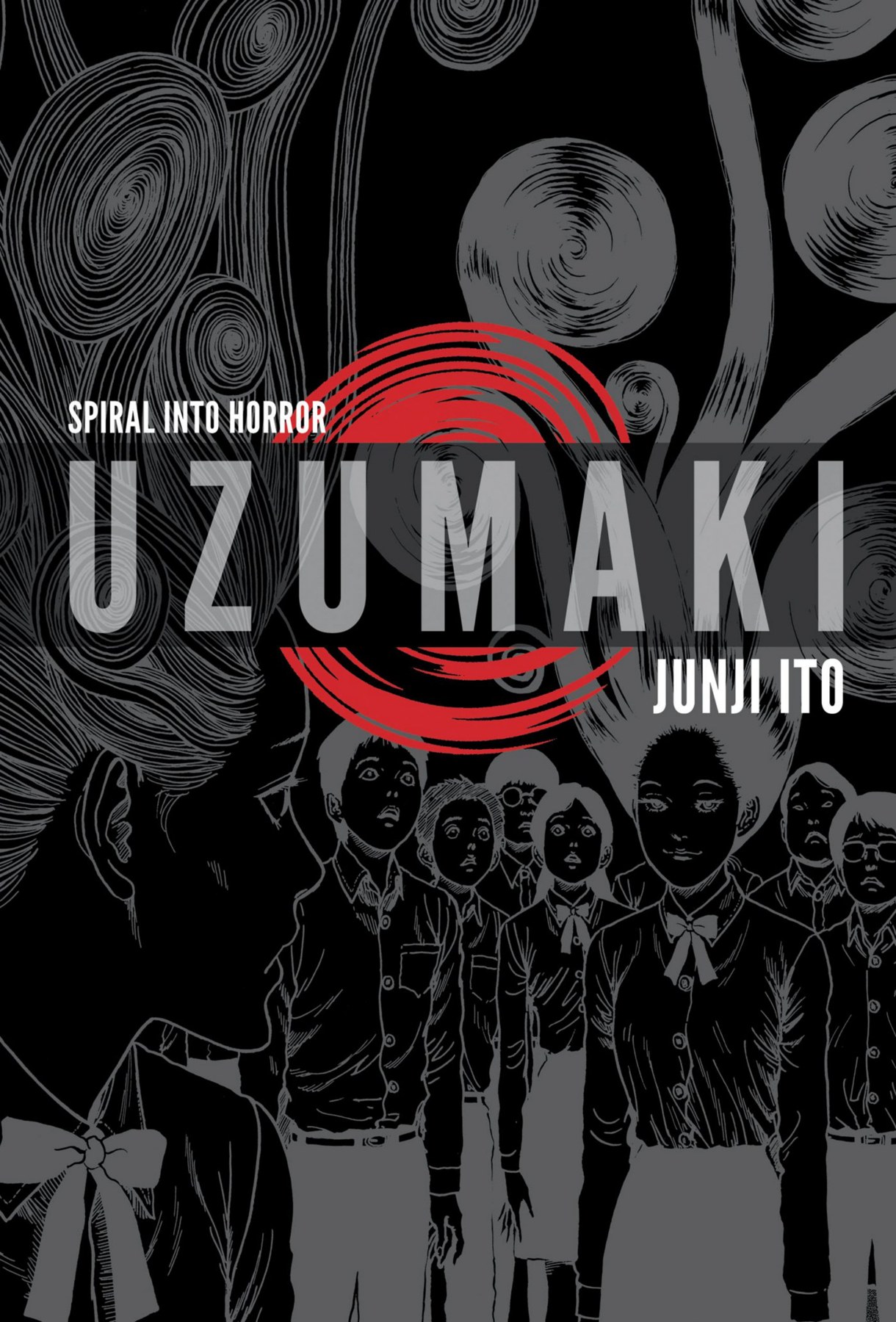
Kirie lives in a small coastal town. When her boyfriend Shuichi tells her something is wrong with the place, it sounds impossible. But she has already seen his father crouched beside a wall, staring at a snail. Soon, he fills a room with spirals: patterned bowls, coiled objects, pictures covering the walls.
“Everywhere your eye goes, another curve pulls it somewhere else.”
The obsession takes over dinner. Shuichi’s father gets angry because there are no spiral-patterned fishcakes in his soup, then stirs it until a whirlpool forms. Now he can eat. His family is still trying to have an ordinary evening, but a missing ingredient has become unbearable. That small domestic disruption is frightening before the story reaches its more spectacular images.
Everywhere your eye goes, another curve pulls it somewhere else. Junji Ito keeps the reactions recognizable even as the behavior becomes impossible. A son worries about his father. A family tries to accommodate something it cannot understand. The spiral gradually takes up the room that used to belong to everything else.
Afraid of someone noticing something
Shuichi’s mother develops a terror of spirals. A nurse leans over her hospital bed, and the curl in the woman’s hair becomes a reason to panic. Later, Shuichi notices an anatomical diagram on the wall. Inside the ear is another spiral. Suddenly, you are hoping she does not look up.
Ito makes you afraid of someone noticing something. Then he gets you doing it yourself. You start searching the backgrounds, watching the clouds, looking at hair and smoke and anything that curls. After reading it, I caught myself checking every curl of steam.
This is a particularly effective use of the comics page. You can pause over an image, notice a shape before a character does, and dread the moment their attention catches up. An ordinary detail becomes a threat without needing to move.
Beautiful enough to keep looking
Ito’s black-and-white drawing is precise enough to give impossible things texture and weight. Familiar streets and rooms are carefully described. When bodies begin to change, that same attention makes the transformation horribly tangible. The world does not become vague just because it has stopped making sense.
Hair is especially unsettling because its curls are already something your eye wants to follow. Ito pushes that invitation until the familiar shape becomes too elaborate, too insistent, too alive. Some of these images are beautiful. You can find yourself studying the curves even while recoiling from what they are doing to someone.
The quieter drawings give that detail somewhere to work. A picture of the town can seem almost uneventful, but by this point the reader has learned to inspect it. You bring the fear with you into the next image.
Knowing the danger doesn’t make leaving easy
At first, the chapters feel like separate nightmares happening around Kirie and Shuichi. The disturbances accumulate until the whole town feels caught in something neither of them understands. The changing incidents give Ito room to keep finding new uses for the same simple shape.
For me, the spiral captures how an obsession can narrow your world until everything leads back to the same thought. Recognizing the pattern does not give you control over it. Shuichi sees the danger early; Kirie still has a home here, a family, a life. Leaving should be the obvious answer. Ito makes staying feel frighteningly ordinary.
Start with the 3-in-1 Deluxe Edition for the complete story. It is a substantial Halloween read, and the appeal is in the accumulation: a room of objects, an impossible body, another familiar view of the town. By then, even the quiet pictures give you something to search for.