
Comic review
Chainkata #1
Daniel Warren Johnson makes you wait for Luma’s first clean swing. By the time it comes, a quiet scene with her younger self has changed what you’re watching for.
Daniel Warren Johnson · Rus Wooton · Mike Spicer
Advance review based on the retailer ashcan. It discusses the opening, a training flashback, and selected action panels. The ending and the weapon’s biggest reveal are left for the comic. Includes bloody violence.
Narrated with on-screen captions. Artwork belongs to its respective creators and rights holders.
Inside the book
Luma and her mechanical companion Uriel bring their ship to a castle floating among the wreckage of past wars. The dealer inside may have what she has spent years trying to find.
Find your next read after Chainkata #1 →
Read the video transcript
Luma thinks she’s finally found it.
After years of searching, a dealer in the wreckage of other people’s wars might have the last piece she needs.
So she brings her ship to his castle, and carries a chainsaw almost as big as she is into the meeting.
What got me about Chainkata was how quickly I went from wanting to see what Luma could do with that weapon to wanting to know what she’d been through.
Because she looks capable of fighting her way through almost anything.
She also looks like she’s getting tired of having to.
This is Chainkata, written and illustrated by Daniel Warren Johnson, coming November eighteenth from Image Comics.
I’ve been reading the retailer ashcan. We’ll look at the opening and some of the art, but I’m protecting the ending and the biggest discoveries.
We meet Luma aboard the Endless, traveling with a mechanical companion named Uriel.
He handles the approach and prepares the payment. When he asks whether their host will cooperate, Luma gives him two words: “They better.”
There’s an easy familiarity between them.
But when she says this could finally be the last piece, and he asks how many years it’s been, her answer is: “Too many.”
We don’t know exactly what she’s searching for yet. We know she’s letting herself hope this stop might be different.
They also talk about the Endless, the shipyards it came from, and whether there might be others still scattered out there.
And Luma says she thinks she’s the only one left.
That’s a lonely way to introduce a queen.
She has the title. She has this incredible weapon. But the conversation makes you wonder what’s left of the life those things belonged to.
And Johnson gives that loneliness a setting big enough to feel it.
Look at the ship against those fields of color.
Much of the ashcan’s figure work and interiors are black and white, but the space scenes open into these washes of purple, blue, and red.
I really like that contrast. The ship feels tangible. You can see its shape and machinery. Everything around it feels almost dreamlike.
Then we arrive at the castle.
This is a page I’d happily stop on for a while.
You’ve got a fortress hanging in a field of wreckage, a rock face at the edge of the frame, and that huge expanse of space behind it.
It has the silhouette of somewhere you’d find at the end of a fantasy quest, except you’re approaching it in a spaceship.
That combination works for me immediately.
Luma meets Tentarus Gosta, a man who profits from wars between queens.
He doesn’t start them, he explains. He just benefits from them.
Which is an absolutely reassuring thing to hear from the person you’re about to do business with.
It also tells us something about this world: wars between queens leave wreckage, and men like Gosta make a living collecting what other people have lost.
Luma clearly dislikes him. But after searching this long, she needs to know whether he has what she came for.
So I’m wondering how much she’s willing to tolerate for the possibility that he actually has it.
Then the meeting turns violent.
And this is where I want to slow down, because Johnson doesn’t hand you the chainsaw swing right away. He builds to it.
There’s a sequence where Luma reaches for her weapon.
We see the reach. We see Gosta recognize what she’s about to do and scream at his people to keep her away from it.
We see her hand close around the handle.
And then she gets taken down anyway.
That’s a good little reversal. Johnson keeps your attention on that weapon, so you're anticipating what happens when she gets it. Then he makes you wait.
Those smaller panels move you through the immediate decisions: reach, react, grab.
You can feel the page controlling the pace.
And while she’s out, Johnson cuts to a very different scene.
A younger Luma learning to use a weapon.
She tries to follow the movement. She struggles with the weight. She gets frustrated.
And the person teaching her responds with patience.
We just watched adult Luma reach for that weapon. Now we see a time when she could barely lift it.
Somebody had to teach her, and encourage her when she struggled.
That made me wonder what happened between this child and the woman we’ve been watching, and how much of that relationship she carries into every fight.
For me, that’s the scene that turns a striking character design into somebody I want to follow.
And the art deserves credit for that too.
We spend a lot of time talking about how Johnson draws impact, but look at how differently these characters occupy the quieter panels.
The gestures get smaller. A face gets room to carry the moment. The attention shifts from what a body can do to how somebody is feeling.
The training scene needs that warmth. Without it, it would mostly tell us where Luma learned to fight.
With it, we get a glimpse of a relationship that mattered.
Her frustration is more understandable, and the thought that this trip could be another dead end starts to feel worse.
When Luma wakes up, a lot happens that I’m going to leave for you to find.
But when she finally gets her hands on that chainsaw and cuts loose, Johnson gives the action room to explode across the page.
Her whole body is involved.
Her shoulders turn. Her stance changes. Her hair follows the motion.
The chainsaw takes up enough room that the people around her have to react to its path.
That’s what makes it feel heavy to me. You can see the effort and the space it takes to use it.
And the sound effects are part of that.
They cut across the drawing and stretch with the movement. When they turn red against the black-and-white art, you can almost hear the book getting louder.
This is the kind of action I want to look through twice. Once because I’m following what’s happening, and again because I want to see how the drawing made it feel that fast.
And having seen that training scene, I’m bringing something different to it.
I’ve seen the frustration that came before the skill. I’ve seen someone treat her gently.
So even while I’m enjoying the spectacle, I’m thinking about what it took to get her here.
Luma can fight the people standing in front of her.
Whether that gets her what she actually needs is the question that makes me want to continue.
I want more of her relationship with Uriel. His voice gives her someone on her side in a place where almost everything else feels threatening.
And I want to see where this strange, beautiful world takes them next.
But the thing that stayed with me was simpler.
I enjoyed watching her fight.
I also wanted her to get a moment where she didn’t have to.
Chainkata number one arrives November eighteenth from Image Comics. Forty pages, no ads, for three dollars and ninety-nine cents.
If the giant chainsaw gets you to open it, I completely understand.
But give the quiet moments some attention too.
Those are what made me care who was holding it.
I already can’t wait for issue two! What comic pulled you in with the art, then made you stay for the story?
Watch next
All video reviews →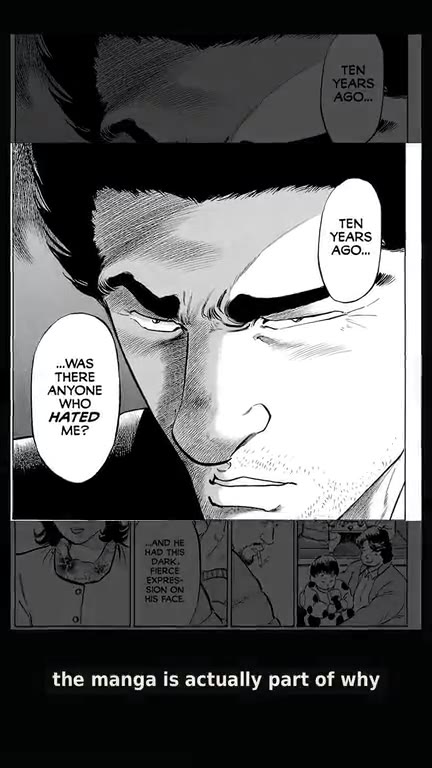 ▶ 2:47
Comic review
Old Boy
Someone pays to keep Shinichi Goto in a room for ten years, then lets him out. The explanation divides readers. Its smallness is what makes it so disturbing to me.
Watch review →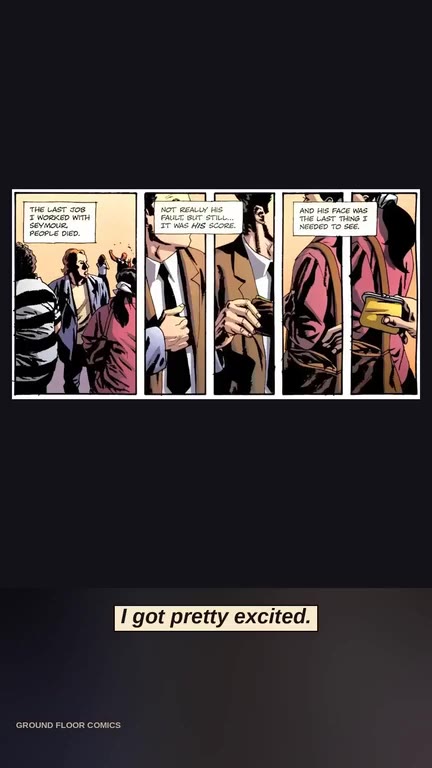 ▶ 2:51
Comic review
Criminal, Vol. 1: Coward
Everyone knows Leo will run when a job goes bad. Ed Brubaker and Sean Phillips make that instinct feel like the smartest thing about him, right up until someone he loves needs him to stay.
Watch review →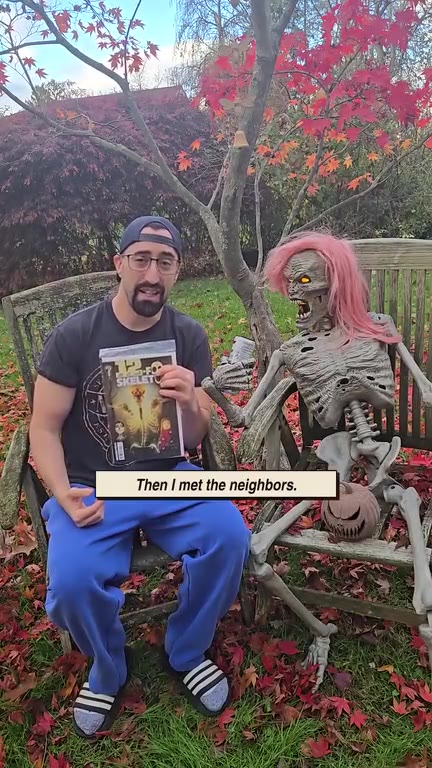 ▶ 2:10
Comic review
12-Foot Skeleton #1
Jimmy’s mom surprises him with a giant skeleton for Halloween. By the time it starts to look like trouble, the kids on his bus have already made the neighborhood scary enough.
Watch review →