The ritual he cannot let end
Jack Chandler’s husband and daughter are zombies, and he is terrified someone will kill them. He has spent twelve years living alongside his undead family and neighbors. He keeps them fed. They repeat the routines of their last healthy day, and Jack helps them do it. Every morning, he gets to pretend a little longer.
One small interaction makes that life painfully clear. Jack picks up his daughter’s toy duck and asks her what a duck says. In his memories, she answers him. Now she makes a sound that barely resembles a word. He takes her hand anyway. That is the kind of horror this book does best: a little ritual he cannot let end.
“Jack isn’t running from the dead. He’s holding onto them.”
Jack isn’t running from the dead. He’s holding onto them. The familiar question of how to survive becomes a more uncomfortable question about how to keep loving someone whose presence and absence have become impossible to separate.
A home he had to fight for
Brombal shows why Jack cannot let go. He grew up facing rejection and homophobia. Building a home with Luke and becoming a father were things he had to fight for. Losing that family would mean losing a life that never came easily.
You understand why he refuses. You might even want him to win. But that does not make what he is doing any easier to watch. His care is real, and so is his denial. The story lets those truths sit together instead of making one cancel the other out.
Then Jack says something that makes the situation worse: Daisy should be going off to college. He is getting older. She is still the little girl standing beside his bed. That gap makes the twelve years feel like something more painful than background information.
The dream and the nightmare share a kitchen
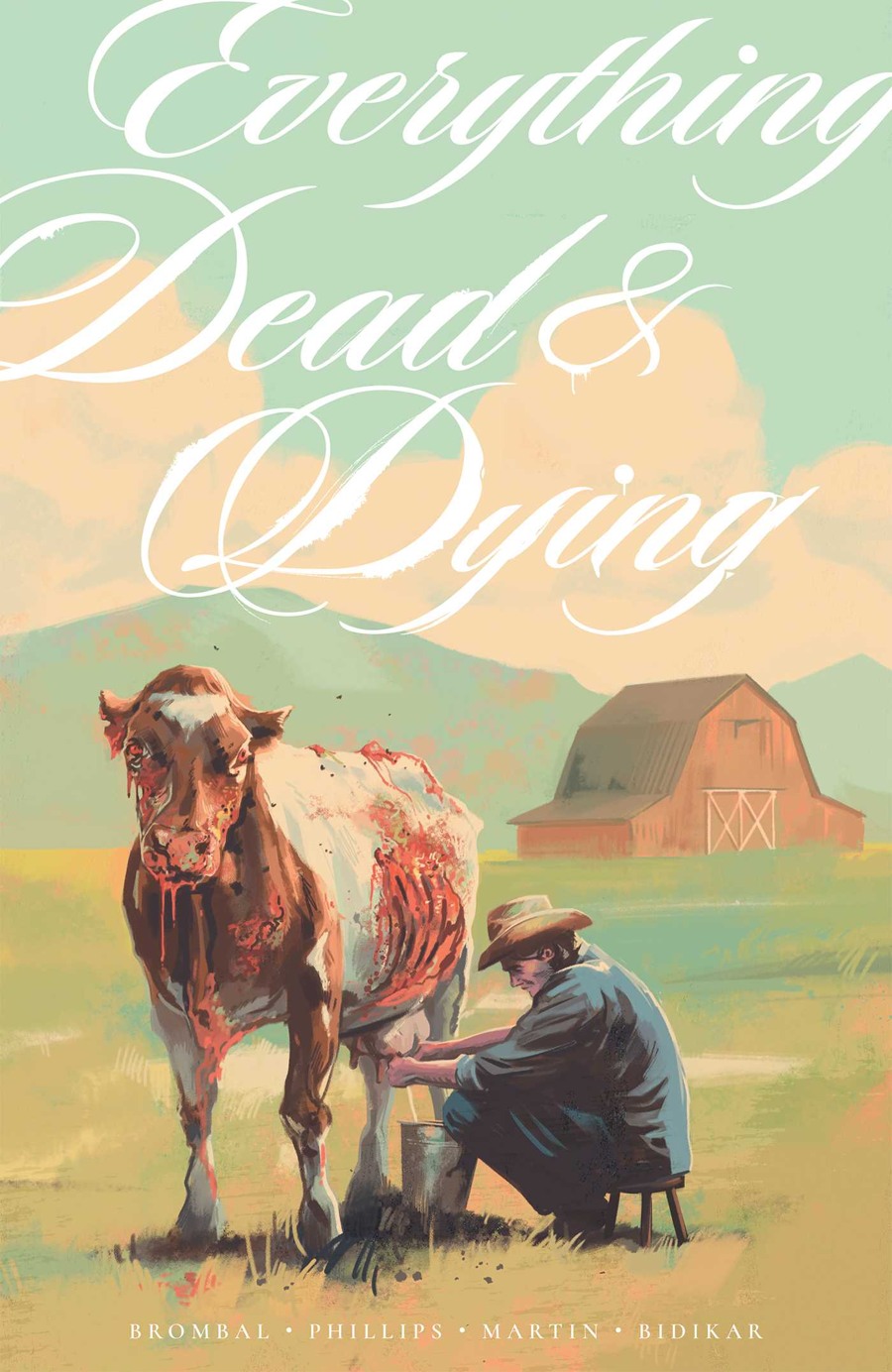
Phillips and Martin move us between the life Jack remembers and the one he is living. His memories look like a dream: pink skies, golden sunlight, Luke smiling in a garden. The present is dirt and decay, and Jack keeps trying to live in both.
Even those memories do not feel entirely safe. In an early scene, the family looks healthy around the breakfast table. But look at the kitchen: stains and smears, heavy black shadows swallowing the room. The warmth of having them together does not erase what the image is making you notice.
The contrast is what gives the artwork so much of its emotional force. It lets you feel the appeal of the remembered home and the discomfort of the life Jack is maintaining. You miss this family while they are still on the page.
When survival becomes a threat
Then other survivors arrive. They see a town full of zombies. Jack sees his neighbors; he knows their names. The people you would normally follow through a zombie story become the ones threatening his family.
If zombie fatigue has set in, that change of perspective is a reason to try this book. The question that stays with me is how you grieve someone who is still sitting across the table. Everything Dead & Dying is complete in one volume, so the five-issue collection gives you the whole story.