Little pieces waiting to mean something
Norton searches the city’s rubbish for things other people would walk straight past: a bent nail, a splinter of wood. He feels compelled to collect them. Sorrentino circles one tiny fragment in red, making you study it as closely as Norton does. Back at his apartment, shelves of jars hold all these little pieces, waiting to mean something.
“Even when I stop to admire a page, I don’t feel comfortable inside it.”
There is a recognizable need underneath that strange activity. Norton tells his therapist that he likes having his own apartment. He likes being free. He is afraid of going back to the hospital. Those details give him a life worth caring about before the mystery has supplied an explanation.
A town, a priest, and the Black Barn
Father Fred arrives in a rural town to replace a priest who has died. He is walking into other people’s grief with plenty of his own unease. The shift from Norton’s city to Fred’s new surroundings gives the book two very different places to feel unsettled.
Somewhere in both men’s lives is the Black Barn. It feels wrong before you understand anything about it. You want to know what is inside, and you also want them to stay away from it. That tension keeps the mystery moving without making curiosity feel safe.
The artwork makes you feel it too
The longer you look at some of these pages, the less sense they seem to make. You can follow every little panel and still feel completely lost. That is what gets me about Gideon Falls: the people are struggling to understand what is happening to them, and the artwork makes you feel that struggle too.
Overlapping circles guide you from one moment into another. Sorrentino gives your eye a route, but the way those shapes meet makes space feel less dependable. Reading becomes an active task: you keep looking for the relationship between the part you understand and the larger picture.
At another point, Fred’s face breaks into little rectangles. His fear seems to be tearing the picture apart. Dave Stewart’s colors make those shifts hit harder. After tired grays and muted browns, red takes over. Suddenly there is nowhere comfortable for your eye to land.
Even when I stop to admire a page, I don’t feel comfortable inside it. The formal invention holds my attention because it remains connected to the characters’ unease. As their world becomes harder to understand, the pages ask me to work harder too.
Start here, but expect to keep going
The people are what keep me invested. Norton wants to hold on to a life of his own; Fred is trying to find his place in a town already carrying loss. Those concerns give the visual disorientation something human to work on.
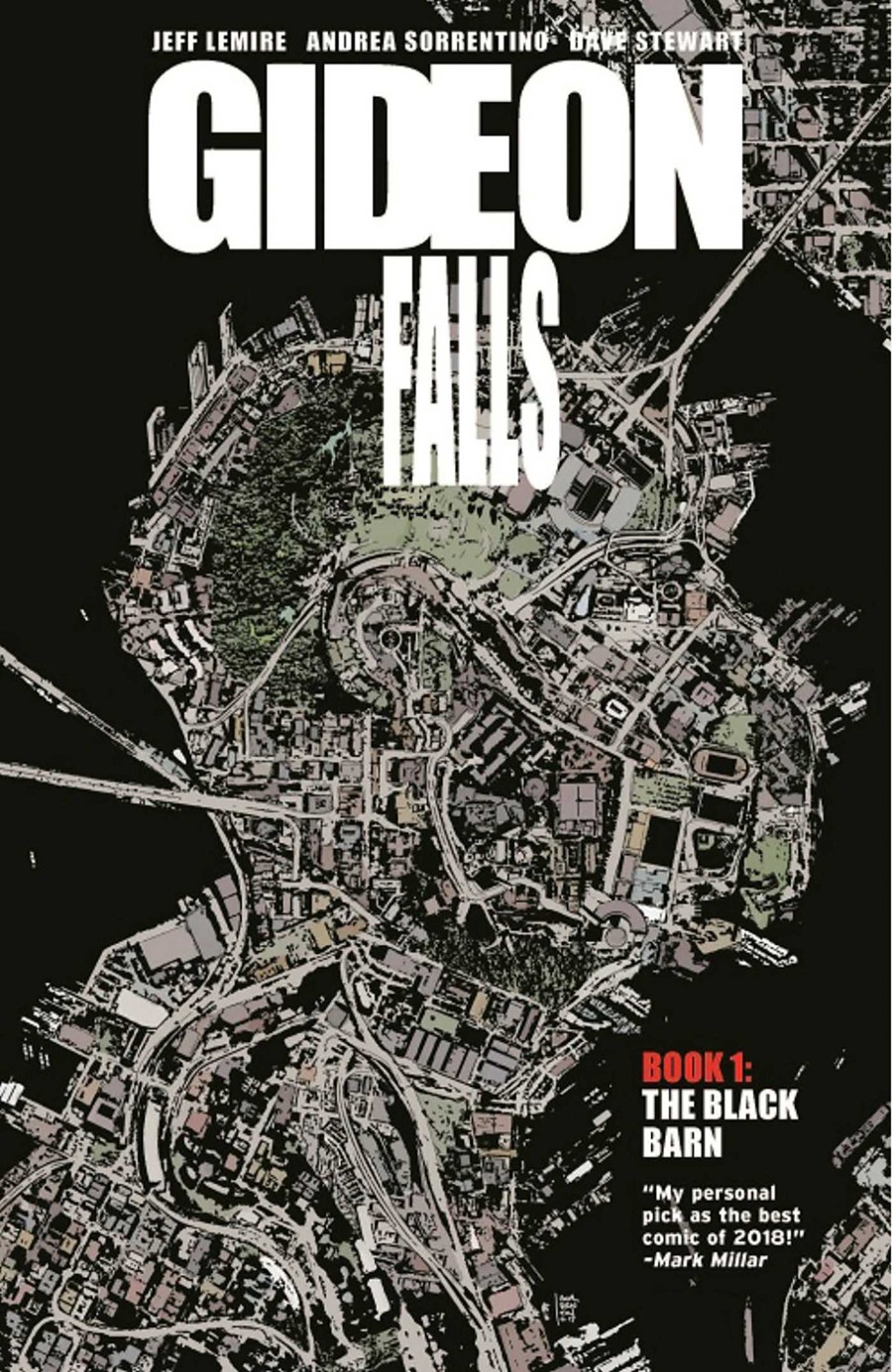
Volume One ends on a cliffhanger. This is the beginning of a series that gets bigger and stranger, so the collection is a starting point rather than a self-contained Halloween read. If that commitment appeals to you, start with The Black Barn.