A warning whispered close
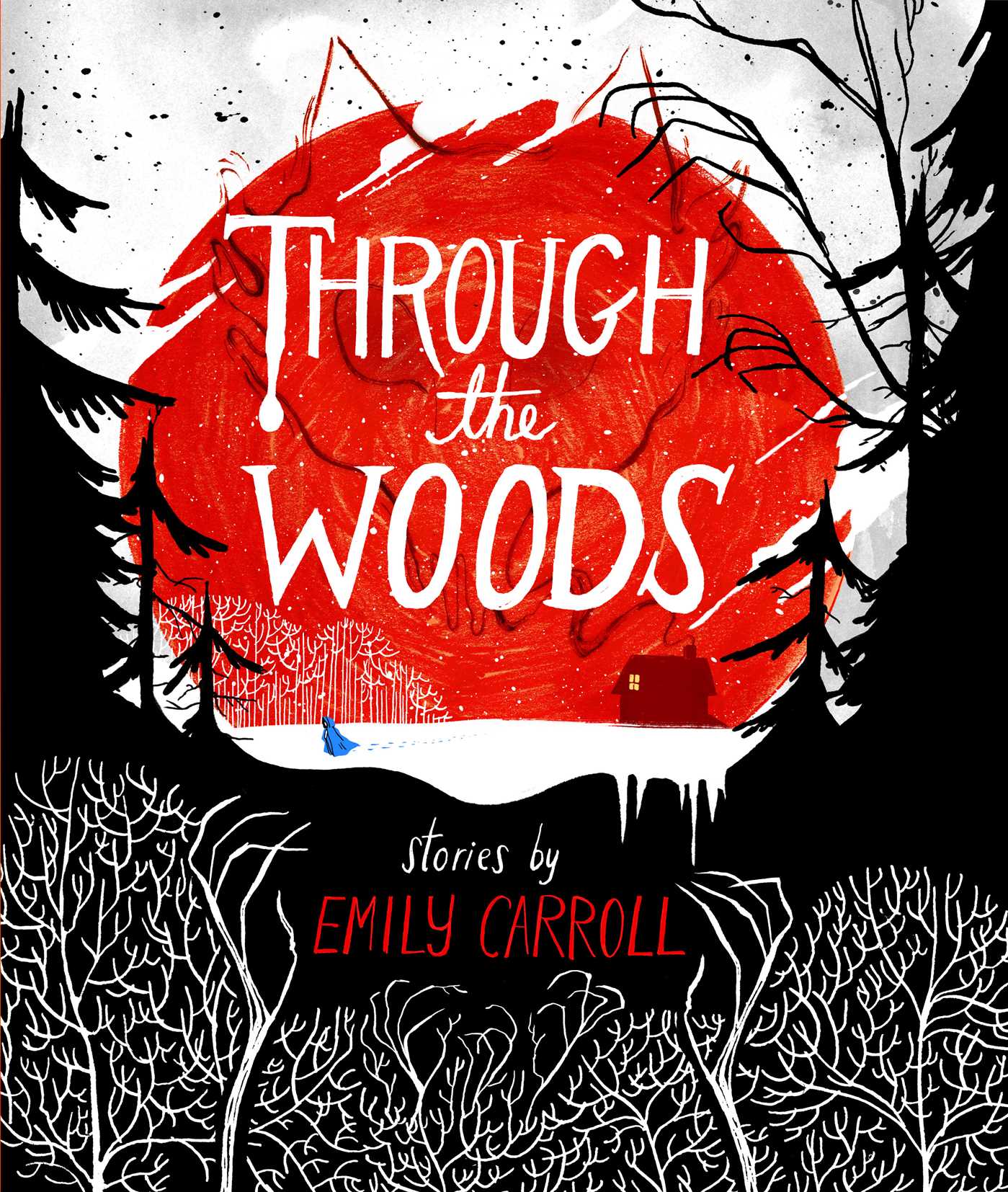
There is a particular kind of fear in a story that sounds as though it has been handed down. You do not expect to negotiate with its dangers. You listen for the mistake someone is about to make. Through the Woods draws on that feeling: the world seems familiar enough to enter, but never familiar enough to trust.
The collection contains five stories, including His Face All Red. Their brevity suits this kind of unease. A short encounter can leave an image lodged in your mind without following it with a reassuring explanation. Read one at a time if you want to give each its own space.
The page does the haunting
Carroll’s use of darkness makes the edges of an image feel consequential. Black space can suggest something beyond the visible scene, while a sudden area of red draws attention with uncomfortable force. Looking becomes an anxious activity: your eye moves toward precisely the thing you might prefer to avoid.
The relationship between words and pictures is part of that effect. The storytelling has the intimacy of someone speaking close to you, while the page can open into something much larger and stranger. That change in scale makes the illustrated world feel capable of swallowing the voice that introduced it.
The comfort of familiar things
Fairy-tale horror works because a house, a family, or a journey already carries expectations. A home should offer shelter. Someone you recognize should be knowable. Carroll makes those expectations feel fragile. The fear comes from the possibility that recognition offers no protection.
This is an atmospheric recommendation more than a promise of elaborate mythology. The stories invite you to sit with disturbing possibilities. Treating every unexplained detail as a puzzle with a hidden answer can work against their effect; sometimes the unfinished feeling is what keeps the fear alive.
Who should read it?
Try this if the image you cannot quite explain stays with you longer than a fully revealed monster. It is also a good next step from horror anthologies when you want a stronger fairy-tale texture and a book whose page design shapes the experience.
For readers who want an ongoing cast, an investigation, or a tightly resolved supernatural system, another kind of horror may be a better fit. Through the Woods is brief, but its uncertainty asks you to linger. That is where much of its power lies.