A tea party with nowhere to go
Aurora is having tea when her world starts falling apart. Literally. She escapes into the woods with the others, and then we see what they have climbed out of: a dead girl lying in the grass. That opening puts the storybook charm beside something you cannot make harmless.
The survivors are tiny. They have little dresses and the manners of people who expect someone else to bring the pastries. Now they need food, shelter, and a way of living together. The change in circumstances does very little to change what some of them expect from everyone else.
Kindness creates work
Aurora gathers food, looks after the others, and keeps believing they can make something good together. Her care is practical. Somebody has to find what they need and make sure people get it.
Some of her companions are very happy to let her do that work. They want food brought to them, attention when they demand it, and someone else to blame when things go wrong. What unsettles me is how familiar those little demands feel. You recognize the behavior long before you see how far it can go.
That familiarity matters more to me than treating these figures as strange little monsters. Aurora is trying to build trust with people who keep finding ways to benefit from it. Even a claim to be taking charge can depend on somebody else quietly doing the caring.
A whole world in the undergrowth
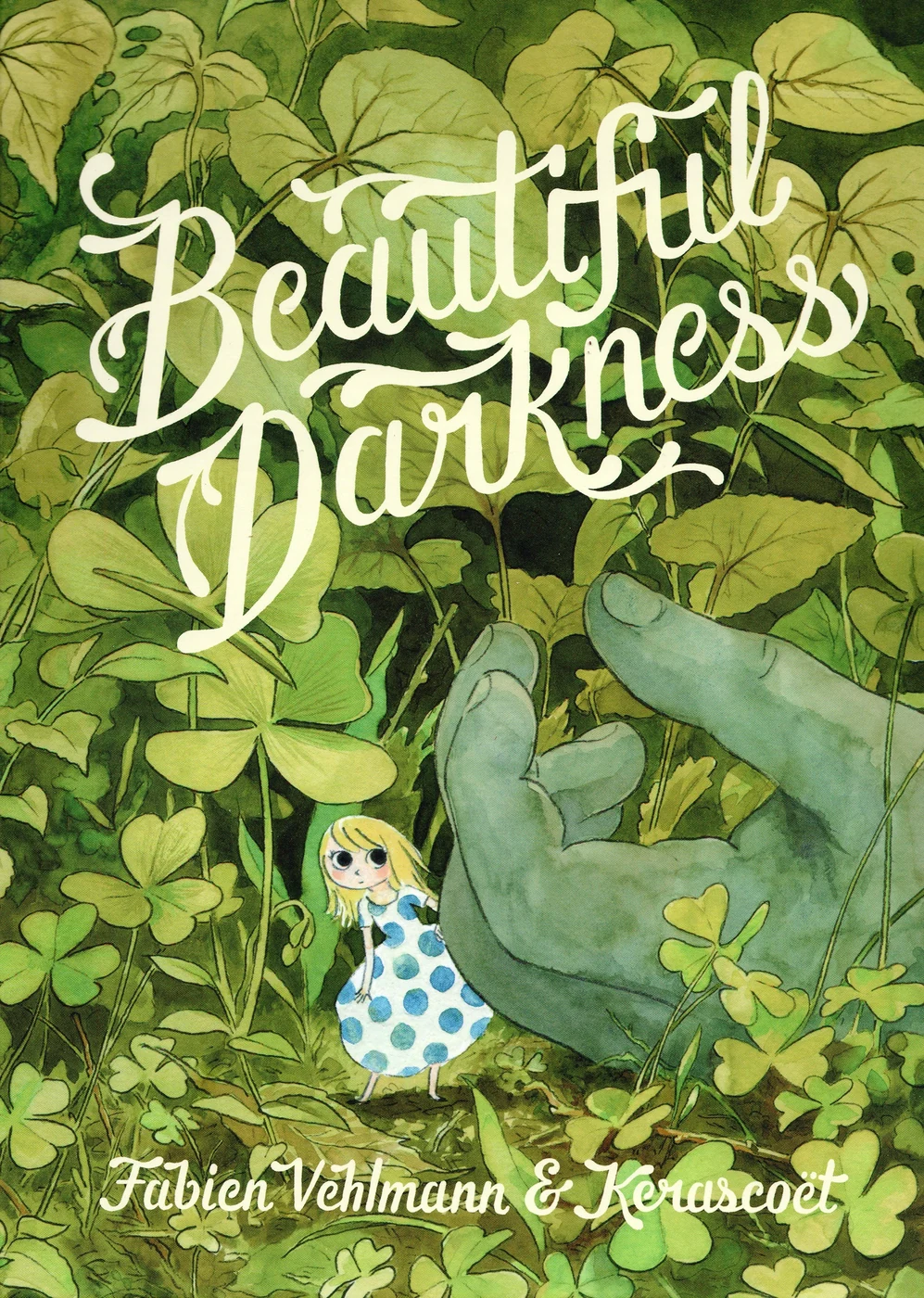
Kerascoët makes these characters almost impossibly cute: tiny shoes, round faces, Aurora’s blue polka-dot dress. You can understand why she keeps hoping for the best. You want to believe in them, too.
Around them, the forest feels much more substantial. Bark, damp leaves, tangled roots: the landscape has a weight the little figures do not. A mouse fills a doorway. A bird can become an enormous threat. The scale turns an ordinary patch of woodland into a whole world to explore.
The watercolor makes you want to stay there. I could spend ages following a branch across a panel, studying the leaves, or watching the figures pick their way through the undergrowth. That attention makes it especially uncomfortable when you notice what someone is doing in the corner. The beauty gives you a reason to look closely at a place where looking closely can hurt.
The woods keep changing
The seasons change around them. Lush greens become autumn golds, then cold blue shadows and snow. The woods keep getting beautiful in different ways; surviving them keeps getting harder.
Through it all, Aurora is trying to find people she can trust. That is what kept me reading. How long can you keep looking after everyone when they treat your kindness as something they are entitled to? I would leave the answer for the book.
Beautiful Darkness is one complete graphic novel, translated by Helge Dascher. It is short enough to finish in a sitting, but the artwork gives you plenty of reasons to slow down. Does a story feel crueler when it looks this beautiful?