The pressure follows her
Ro Meadows is a painter who cannot paint. Moving into an old house promises distance from the demands of her work, but the blank canvas comes with her. There is something painfully recognizable about trying to arrange the perfect conditions for inspiration and discovering that you are still the person expected to produce it.
Skottie Young gives that frustration room to settle. Ro wants solitude, a change of scene, and permission to find her way back into making things. The house looks like somewhere she could disappear for a while. Before it becomes a source of fear, it offers a version of the life she thinks she needs.
That is what makes the supernatural premise interesting. When something in the house answers her, the encounter is not only a threat. It is attention. For someone stuck in her own head, being heard can be its own temptation.
When the dark feels good
The relationship develops through comfort, curiosity, and the return of creative energy. Ro starts painting again. The disturbing question is how much you might excuse if a presence that frightened you also seemed to understand you, and helped you recover the part of yourself you thought you had lost.
The book makes room for the appeal of retreat: wine, privacy, and the freedom to explore something you would normally pull away from. That attraction matters. If the house offered only misery, leaving would be a simpler proposition. Instead, inspiration becomes tangled up with the thing that is gradually taking over her life.
This is where the horror feels most intimate. Small accommodations begin to look like obligations. A source of comfort can become a source of control without losing every trace of what made it desirable. The story asks you to remember both feelings at once.
A house you can feel around you
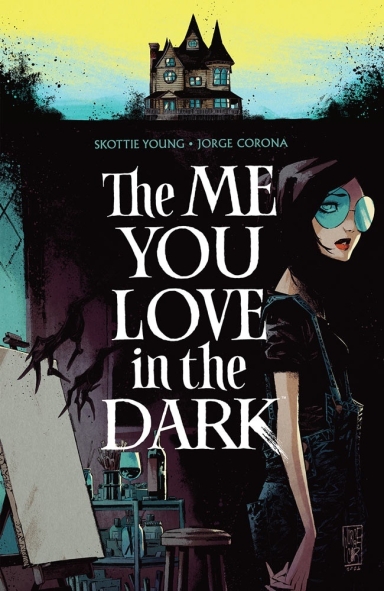
Jorge Corona gives the house a strong physical presence. The pointed roof and steep shapes dominate the opening view, while Ro and the estate agent become small silhouettes beside it. Ro sees possibility in a building that already seems capable of overwhelming her. The composition makes that imbalance visible before the relationship begins.
Inside, tall rooms, crowded walls, and deep stairwells create spaces that can feel inviting or confining. Corona’s expressive faces keep Ro readable within all that architecture. Her gestures and posture make it possible to follow the emotional shifts without turning every moment into an explanation.
Jean-François Beaulieu’s colors make the darkness especially persuasive. Pockets of warm light can seem almost comforting against the cooler shadows. The attraction and the unease occupy the same room. The art lets you understand why Ro might want to stay there, even as staying begins to feel dangerous.
What makes it linger
The strongest part of this story is the compassion its premise allows. Ro is looking for relief from a pressure that has made something she loves difficult. Her vulnerability makes the relationship believable without making the harm acceptable.
Read it for the sadness of watching a source of pleasure become something harder to escape. The creative angle gives that familiar relationship dynamic a particular sting: if you believe the connection is the reason you can make art again, what else might you convince yourself you have to accept?
The complete five-issue story fits in one volume. It is a good choice when you want a concentrated Gothic read whose emotional discomfort lasts longer than its page count. What stays with you is the memory of how good the danger seemed to feel at first.