The reassurance that doesn’t reach her
Sailor Rooks says something pulled a girl into a tree. The girl had been bullying and threatening her, and Sailor was injured during the encounter. Her parents have an explanation for what she remembers. Sailor has a fear that their explanation does nothing to remove.
“The monsters are frightening. The possibility of failing someone you love is what makes them hurt.”
The family moves, hoping distance will make a new beginning possible. On her first school morning, Sailor’s dad, Charlie, tries to distract her by inventing ridiculous ways to kill hippogriffs. Their shared joke is warm and silly. For a moment, you can see the kind of protection he wants to offer: a private language that makes an intimidating world feel manageable.
That tenderness gives the later friction its weight. When reassurance fails, Charlie can become frustrated with the fear itself. Anyone who has been told there is nothing to worry about while still feeling terrified will recognize the distance between those two experiences. Sailor needs her father to understand what she is feeling before he tries to make it go away.
Someone else gets to make the bargain
The wytches are enormous, distorted creatures living beneath the woods. People can make bargains with them: offer someone else and receive something they want in return. The language of a pledge makes that exchange sound almost orderly, which only makes its cruelty worse.
It gives the story a particularly nasty source of uncertainty. Being in danger does not require choosing danger. Someone else can decide that their desire matters more than your life. The woods hold the monsters, but the possibility of an ordinary person making that calculation brings the threat much closer.
Snyder builds the larger horror around a family relationship you have already had time to care about. Learning the rules matters because Charlie and Sailor have to live with them. The most painful question is how well a parent can protect a child when understanding what is happening arrives later than it should.
Pages that never quite settle
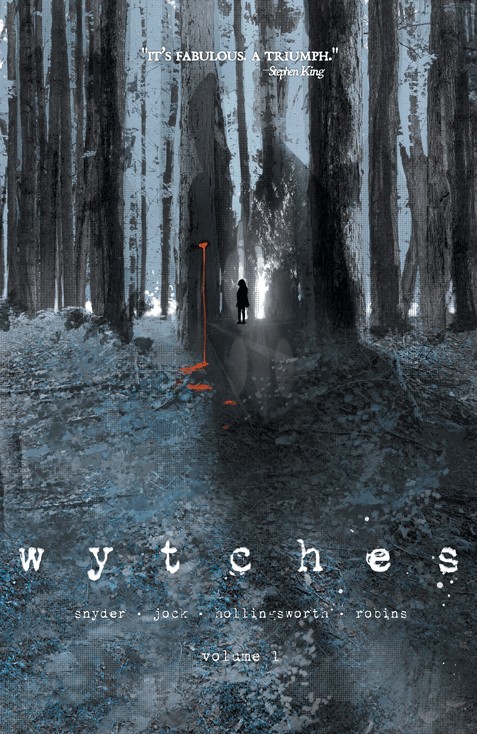
Jock makes the woods difficult to read with confidence. Dark branches and angular figures compete for your attention; a shape can seem like part of a tree until you look again. That uncertainty is useful in a horror comic. Your eyes keep searching for a boundary between the landscape and whatever might be hiding in it.
Matt Hollingsworth’s color pushes that instability across the page. Spatters and washes interrupt faces, backgrounds, and stretches of apparently open space. The images can look bruised or stained before anything violent happens within the scene. Fear seems to have reached the surface of the paper.
The effect is especially uncomfortable when an ordinary setting ought to offer relief. Even the blue of a swimming pool becomes murky around Sailor. Color stops functioning as a reassuring distinction between safe, everyday places and frightening ones. The unease travels with her.
There is a real tradeoff here: the interference can make a page harder to take in. If you want every expression and action to arrive cleanly, the technique may keep pulling you out of the story. For me, its strength is precisely that refusal to let the scene settle. The artwork gives the reader a little of Sailor’s difficulty finding somewhere that feels safe.
The fear underneath the creatures
The book’s strongest connection is between the helplessness of being frightened and the helplessness of loving someone who is frightened. Charlie’s efforts are sometimes affectionate and sometimes inadequate. That makes his relationship with Sailor worth following even before the supernatural danger fully takes shape.
The six-issue arc collected here is a concentrated read, but it has enough room for that relationship to complicate the scares. Its larger mythology can be compelling; its emotional force comes from a smaller, more recognizable fear. What if someone depends on you, and you do not understand what they need until the danger is already close?
Read Wytches for the abrasive beauty of its pages and the vulnerability beneath its creature horror. The monsters are frightening. The possibility of failing someone you love is what makes them hurt.