The person Chloe wants to expose
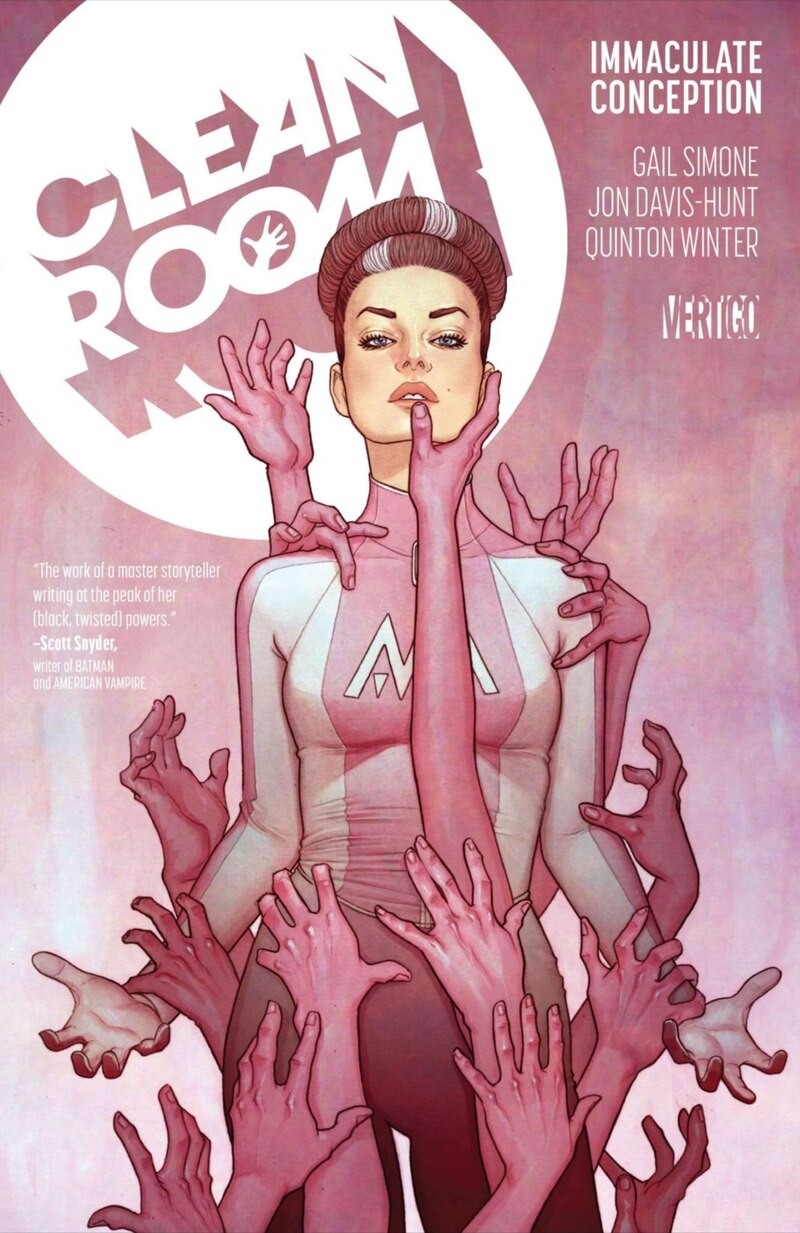
Chloe Pierce has every reason to distrust Astrid Mueller. Her fiancé joined Astrid’s organization. A video he received becomes the beginning of a tragedy, and Chloe goes looking for the person behind it.
Astrid has bestselling books, celebrity followers, and people who know how to make others cooperate. Those are recognizable signs of a dangerous organization. Gail Simone lets that recognition do useful work before the supernatural threat takes over.
Chloe goes in to expose her. Instead, she begins to see things too: creatures that ride people, wear them, and use them to do horrible things. The investigation no longer has the reassuring shape of an outsider discovering a fraud.
Being right does not make her safe
Astrid is recruiting soldiers for a war she believes is already happening. The difficult question is how much of her behavior becomes easier to excuse once you start to believe her.
The script keeps her terrifying even when her knowledge proves useful. Gratitude and cruelty can belong to the same person. Knowing something about the threat does not tell you what limits she will observe while fighting it.
That is the discomfort I would recommend the book for. It asks you to keep judging someone after the explanation you hoped would discredit her has become much less comfortable.
Bright rooms, nowhere to hide
Jon Davis-Hunt can make a conversation over tea feel threatening. The controlled faces and bright, clinical spaces leave the reader studying the people inside them.
Then an impossible body enters that clarity. The creature has too many mouths, or something inside a person becomes visible. The ordinary surroundings remain readable, which gives the intrusion very little distance from the reader.
Davis-Hunt and Quinton Winter’s color work belongs to that effect. The opening does not need to keep everything in permanent darkness. Brightness can make the horrible thing harder to avoid.
Eighteen issues of uncomfortable belief
There are caveats. The first issue sprints through its setup, and the art changes hands for the final stretch, with Walter Geovani and Sanya Anwar contributing alongside the principal Davis-Hunt run.
The series is complete in eighteen issues, collected in three volumes. That makes it a manageable commitment if you want to follow its central question through a finished story.
What stays with me is not only whether Astrid is right. It is how much I would let her get away with once I believed she was.