The only one who came back
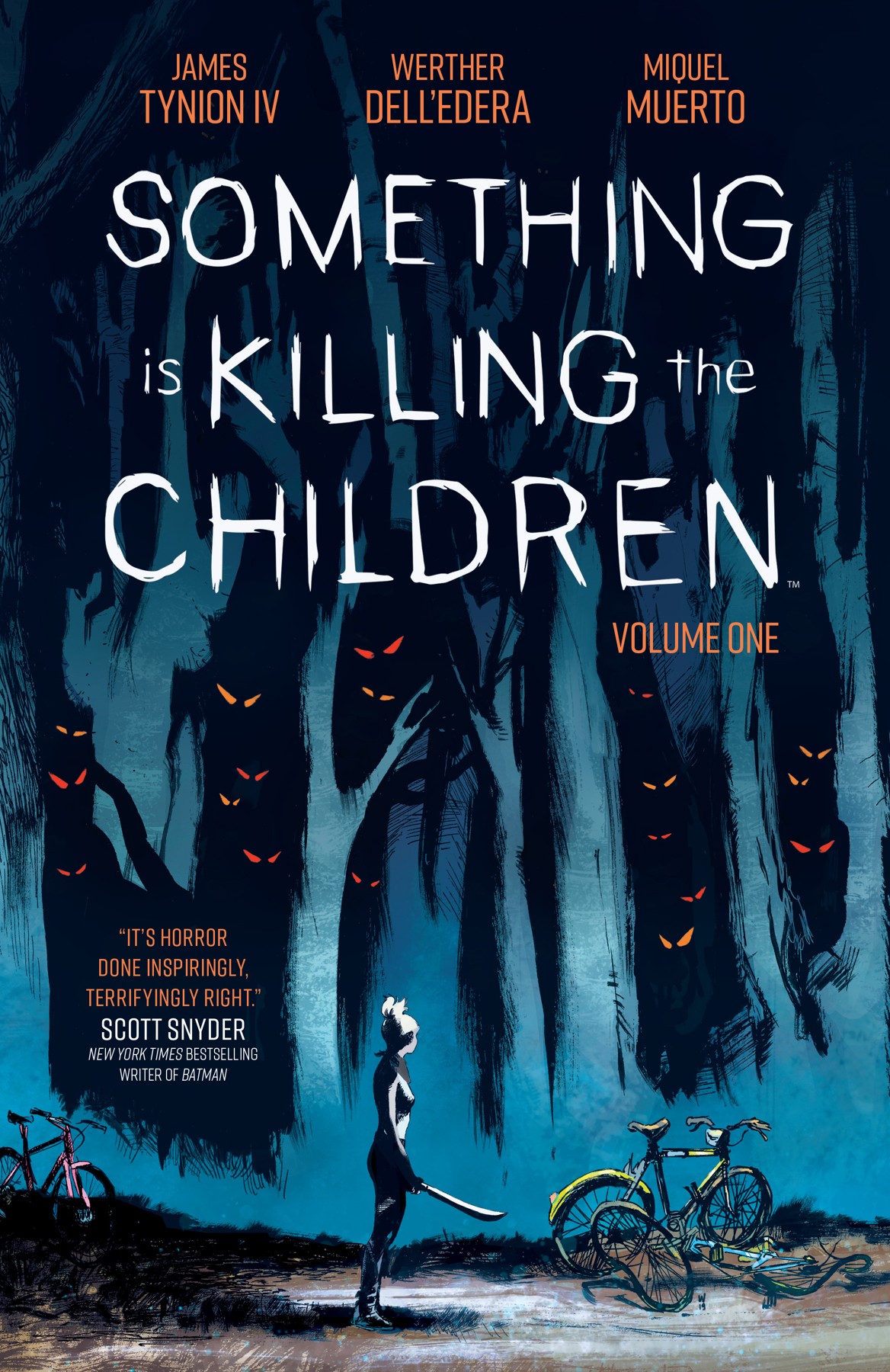
It begins with a sleepover. James tells his friends a frightening story about something outside his house. They like hearing his nightmares, and he likes finally having friends to tell them to. Then they go into the woods. Only James comes back.
“His fear comes with a terrible burden of proof.”
Sitting across from a detective, he keeps insisting that the monster in his story was something he made up. He also heard his friends screaming. A boy who wanted to belong is suddenly the only person left to explain what happened, and other children begin treating him as the explanation.
The cruel part is built into the premise: children can see these monsters; most adults cannot. James has to describe something the people questioning him cannot even see. His fear comes with a terrible burden of proof.
The relief of being believed
Then Erica Slaughter gets off a bus. Pale hair covers one eye. Dark circles surround the other. Dell’Edera gives her a stare that looks exhausted and dangerous at the same time. She is memorable before she has explained anything about herself.
When Erica sits beside James, she promises to believe what he tells her, however strange it sounds. The first time she says it, I realize how badly I have wanted someone in this book to say it. Her arrival gives him more than the possibility of rescue. It gives him someone he can talk to.
She plans to kill the monster, and James wants to help. That gives his fear somewhere to go. But Erica warns him that doing something does not necessarily make you feel better. The book lets the hunt become exciting without presenting action as a simple cure for what he has survived.
How small a frightened boy can look
During the police interview, Dell’Edera moves from James’s wide eyes and trembling face to a distant view of the table. Suddenly, we can see how small he is in that room. The change in distance does emotional work: a face that filled our attention becomes a child surrounded by empty space.
Miquel Muerto fills the woods with cold blues and purples, then sends fierce pinks and reds through them. Blood interrupts the page. The violence feels like a rupture in the world we were looking at, rather than a detail we can comfortably pass over.
Erica’s face is just as important as the creature design. Her tired eyes and guarded expressions keep us looking for what she knows and what this work costs her. The art makes following her feel tempting and unsafe at once.
Every mark on the map is someone missing
As Erica investigates, the deaths become marks on a map. Then a young man recognizes the name being discussed: his missing sister. Tynion keeps bringing the investigation back to people waiting for someone to come home.
There are plenty of reasons to stay curious about Erica herself, including the stuffed octopus she carries and speaks to. But the mystery works because James has already given the story a human stake. We want to know who she is because we want to know whether he can trust her.
Start with Volume One, collecting the first five issues. Erica makes you want to follow her into the woods. James has already shown you what coming back from them can cost.